Pests
Scale Insects on Florida Trees and Shrubs
Scale insects look more like bumps than bugs. They attach to stems and leaves, cover themselves with a protective shell and feed on plant sap. Palms, ficus, gardenia, croton, citrus and many other South Florida plants are common hosts.
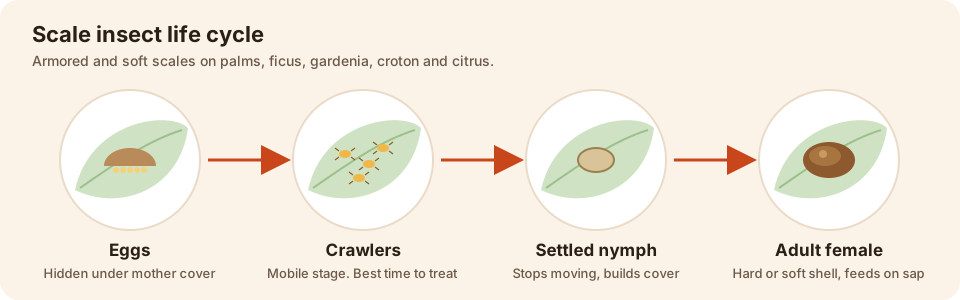
Two main types
- Armored scales build a hard cover that is not attached to their body. They usually do not produce honeydew.
- Soft scales are covered by a waxy skin and produce honeydew, which leads to sooty mold and ants.
Signs of scale
- Small brown, white or gray bumps on stems and leaf undersides.
- Yellow spotting, leaf drop and branch dieback.
- Sticky honeydew, black sooty mold and ants trailing up the plant.
Why scale is hard to control
Once settled under their covers, adults are protected from most sprays. The young crawlers that hatch from eggs are mobile and unprotected, which is the best time to treat.
What works
- Horticultural oil timed for crawler activity smothers young scales with low impact on beneficial insects.
- Systemic treatments work well on soft scales that feed heavily on sap.
- Pruning heavily infested branches reduces the population.
- Follow-up checks confirm whether scales are alive. Dead scale covers can stay on the plant for months.
Not sure what is wrong with your plants?Book a free plant health assessment in Broward or Palm Beach. Call or text 954-799-9715.Get my free assessment