Plant Health
Stress Signs in Common South Florida Ornamentals
Ornamental plants tell you when something is wrong. The trick is reading the signs before a small problem turns into a dead hedge. Here are the stress indicators we see most often on South Florida favorites.
Ixora
- Yellow new leaves with green veins: iron or manganese deficiency, usually from alkaline soil or planting near concrete.
- Black film on leaves: sooty mold from scale or aphids.
Hibiscus
- Yellow leaves dropping fast: watering swings, either too dry or waterlogged.
- Distorted new growth and white fuzz: mealybugs.
- Flower buds dropping: heat stress, drought or thrips.
Croton
- Faded, washed-out color: too much shade or low nutrition.
- Fine stippling and webbing: spider mites during dry weather.
Ficus hedges
- Sudden heavy leaf drop: ficus whitefly is the top suspect.
- Thin, sparse interior: over-shearing or shade from dense outer growth.
Gardenia
- Yellow leaves with green veins: high soil pH blocking iron.
- Sticky leaves and black mold: soft scale or whitefly.
St. Augustinegrass lawns
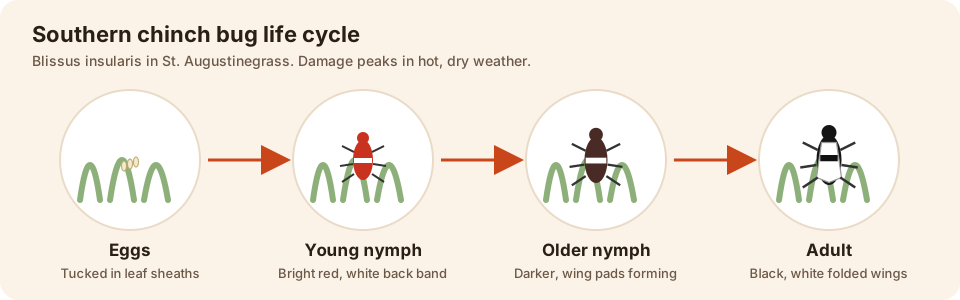
- Expanding yellow-brown patches in sunny areas during hot, dry weather: chinch bugs. They feed in groups, so the dead patches grow outward.
- Circular patches with a brown ring: large patch fungus in cooler, wet months.
General stress signals on any plant
- Wilting in the morning: root problems or severe drought, not just afternoon heat.
- Scorched leaf edges: salt spray, fertilizer burn or drought.
- Dieback from the tips: root rot, borers or chronic stress.
If you see more than one of these at once, it is time for a professional look. Most stress has a fixable cause once it is correctly identified.
Not sure what is wrong with your plants?Book a free plant health assessment in Broward or Palm Beach. Call or text 954-799-9715.Get my free assessment